giacomo manzù exhibition – vercelli
vercelli
10 march – 21 may
An exhibition dedicated to Giacomo Manzù in Vercelli
the exhibition
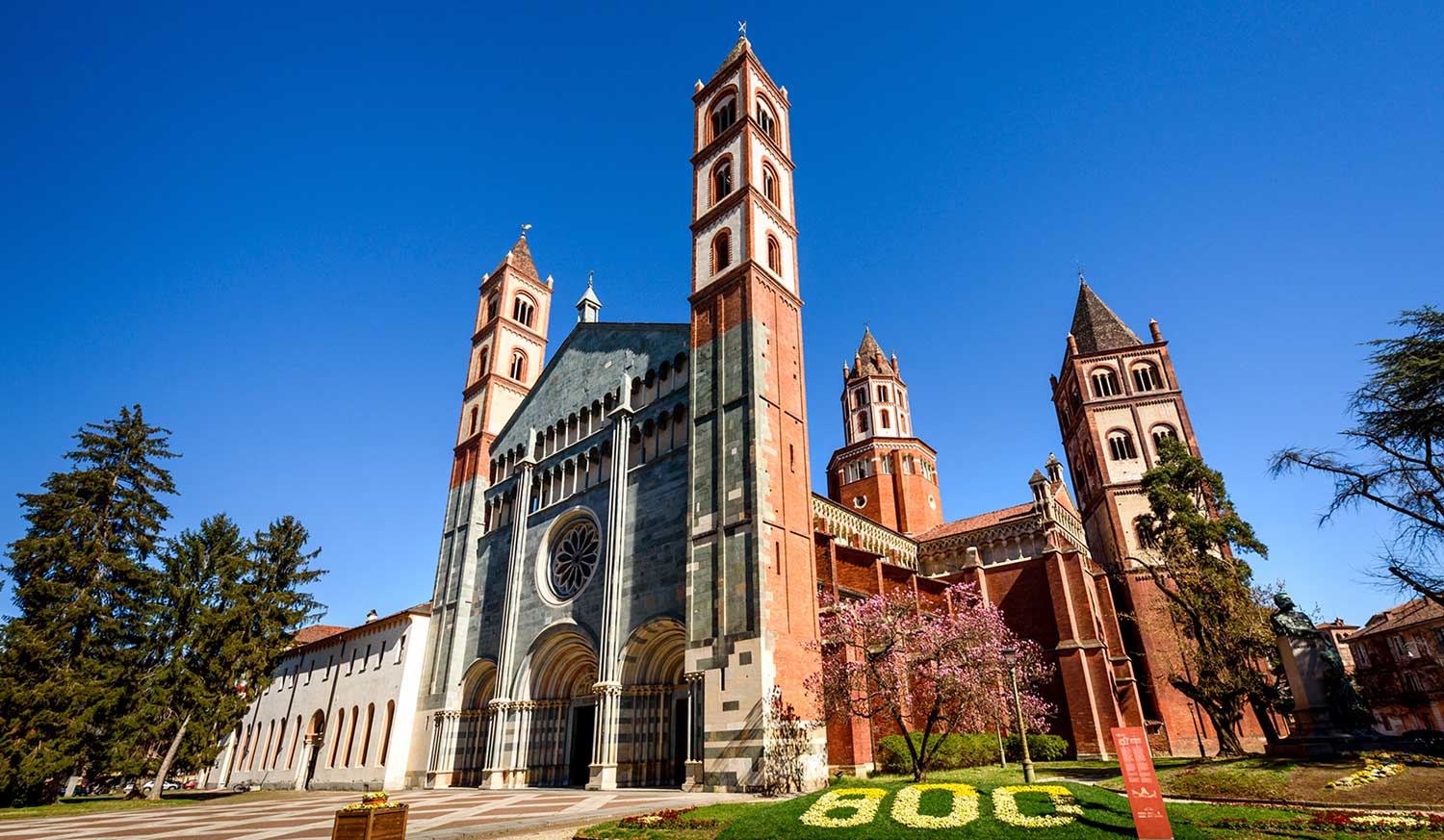
A major retrospective dedicated to Giacomo Manzù is open to the public in Vercelli from until May 21st. The exhibition, curated by Marta Concina, Daniele De Luca and Alberto Fiz and realised by the City of Vercelli, the Archdiocese of Vercelli, Studio Copernico in collaboration with the Manzù Foundation, will be hosted at Arca and at the former church of San Vittore.
The title chosen is “Giacomo Manzù. La scultura è un raggio di luna” (Giacomo Manzù. The sculpture is a moonbeam), which takes up a quotation by Cesare Brandi. Brandi, who better than anyone else was an interpreter of Manzù’s language, wrote in 1983 that “sculpture revolves with many autonomous points of view, all converging in a form that is open and closed, and in its statics is dynamic because of the way it flows within itself with a Heraclitean fluency in which one cannot bathe twice”. The reference is to the series of works dedicated to the young model Thebes, but it can be extended to Manzù’s entire body of work, which has been able to combine the classical dimension with the naturalistic and phenomenological, finding its own autonomous expressive force since the 1930s.

the works
The exhibition proposed in Vercelli brings together over thirty sculptures, some of them monumental, made available by the Manzù Foundation, the Copernico Studio and important private collectors.The itinerary ranges from the 1940s to 1990, a year before his death.
The exhibition, set up in the two venues of Arca and the former church of San Vittore, highlights the topicality of a great master of plastic art by following the different themes that characterise his poetics. Thus, the choice of works allows us to appreciate female portraits, still lifes (just think of Sedia con Aragosta –Chair with Lobster– from 1966) as well as the famous Cardinals, his most famous series begun in the 1930s. “The first time I saw the Cardinals,” said Manzù, “was in St. Peter’s in 1934; they impressed me with their rigid yet vibrant masses of complex spirituality. I saw them as statues, a series of aligned cubes, and the impulse to create my own version of that ineffable reality in sculptures was irresistible’.
In the exhibition, alongside a number of historical bronze Cardinals from the 1940s, there is also Seated Cardinal, a monumental work over two metres high modelled in 1983, from which the hieratic component of the figure emerges within rigid and synthetic pyramid-like forms.

His wife Inge, whom he met in 1954 when Manzù was teaching at the Salzburg Academy and who has been his muse ever since, is a constant in his portraiture, and on display in Vercelli is Busto di Inge (Bust of Inge), a rare work in marble created in 1979 from which emerges an extraordinary vitalism in a composition that takes on a circular form in which the arms are arranged around the woman’s face. Inge gave birth to their two children Giulia and Mileto, this became the occasion to create a series of sculptures on the theme of play: Giulia and Mileto in carrozza (Giulia and Mileto in a carriage) appears in the exhibition with the bronze sketch of 1967. These works are part of the Spielerei cycle where Manzù freely proposes a series of plastic inventions that in this case give him the opportunity to create an archaic carriage dominated by a large wheel.
The experimentation also passes through Donna che guarda (Woman looking), another monumental work dated 1983, 252 centimetres high, sculpted in ebony, a material that, as Manzù says, “is beautiful, very hard, it has like blood in its veins, it can be worked like ice but it is eternal”, a work that was already present in ARCA when the exhibition was presented.
In such a multifaceted journey, mention should also be made of Fauno modellato (Faun modelled) in 1968 where the attitude of the man with folded limbs expresses the power and energy of the body, as well as Il Miracolo di San Biagio (The Miracle of Saint Blaise), a strongly intimist work in which a compassionate Cardinal makes an appearance. “From the Vercelli exhibition therefore emerge,” comments Alberto Fiz, “the different souls of a sculptor who, without rhetoric, became an interpreter of humanity, knowing how to grasp the profound sacredness even in the everyday: ‘Manzù’, writes Brandi, ‘is in his time, outside his time, firmly anchored to those eternal values that he has never forgotten'”.

info e tickets
The exhibition is open to the public from Thursday to Sunday, 10 a.m. to 7 p.m. from 10 March to 21 May 2023. Further information about the exhibition and the purchase of tickets is available at www.manzuvercelli.it.
GUIDED TOURS (Italian only)
Every Sunday from 26 March until the end of the exhibition it is possible to discover the exhibition and the city of Vercelli by taking part in a guided tour. Guided tours must be booked with ATL – Terre dell’Alto Piemonte at the following contacts: 335.7096337 or infovercelli@atlvalsesiavercelli.it.
EXHIBITION GUIDED TOUR EXHIBITION (Italian only)
Meeting at 2 p.m. at ARCA and scheduled departure at 2.15 p.m. The guided tour will last approximately 45 minutes at a cost of €5, plus the “reduced” exhibition fee of €5, to be paid directly at the ARCA ticket office. Total price 10€.
GUIDED TOUR EXHIBITION + CITY TOUR (Italian only)
meeting at 3 p.m. at ARCA and scheduled departure at 3.15 p.m. The guided tour will last approximately 2h15′ at a cost of €10, to which must be added the “reduced” cost of the exhibition of €5, to be paid directly at the ARCA ticket office. Total price 15€.
Discover all the exhibition venues of the diffuse exhibition!
Richiedi
informazioni
su questa
News
Compila il form per saperne di più su questa NEws
holy week
Valsesia e vercellese
april
Discover the Easter traditions of the province of Vercelli
via crucis – quarona
Since the 1980s, the Via Crucis (Stations of the Cross), a true re-enactment of the Passion of Christ, has been performed in the town of Quarona on Good Friday. The Sacred Representation of Good Friday in Quarona is unique in the province of Vercelli. It was first staged in 1982 and has become more and more popular every year, becoming one of the most popular events in the valley.
The scenes performed, which used to be itinerant in the city, as of 2019 take place in Piazza Silvio Pellico and then move up to the area surrounding the church of San Giovanni al Monte. On the evening of Good Friday, the 18 scenes of the Stations of the Cross are performed.
processione delle sette marie – Varallo
There are no official documents to determine the exact moment when this tradition originated in Varallo. The most accredited hypothesis seems to be the tendency to place this event within the paraliturgical rites of the Passion of the Spanish ancestry, considering the important presence of the Iberian rulers in the Duchy of Milan, to which Valsesia belonged until the beginning of the 18th century.
While during the evening of Good Friday the procession takes place within the town centre, starting from the Collegiate Church of San Gaudenzio to reach the Church of San Giacomo and back, in the afternoon of Palm Sunday the procession departs from the Collegiate Church of San Gaudenzio to reach the impressive Sacro Monte. During the procession seven unmarried women with their faces covered by a black veil form a mournful procession, two of them hold up a third one destined to carry the cross, veiled by a white sheet and deprived of the body of Christ, while the others arrange themselves in a sort of symbolic square. Following the Seven Marys are the members of the Confraternity of the Holy Trinity, dressed in blue tunics and carrying lanterns, and those of the Confraternity of the Blessed Sacrament, who, dressed in red robes, lead the statue of Our Lady of Sorrows in procession.

processione delle macchine – VERCelli
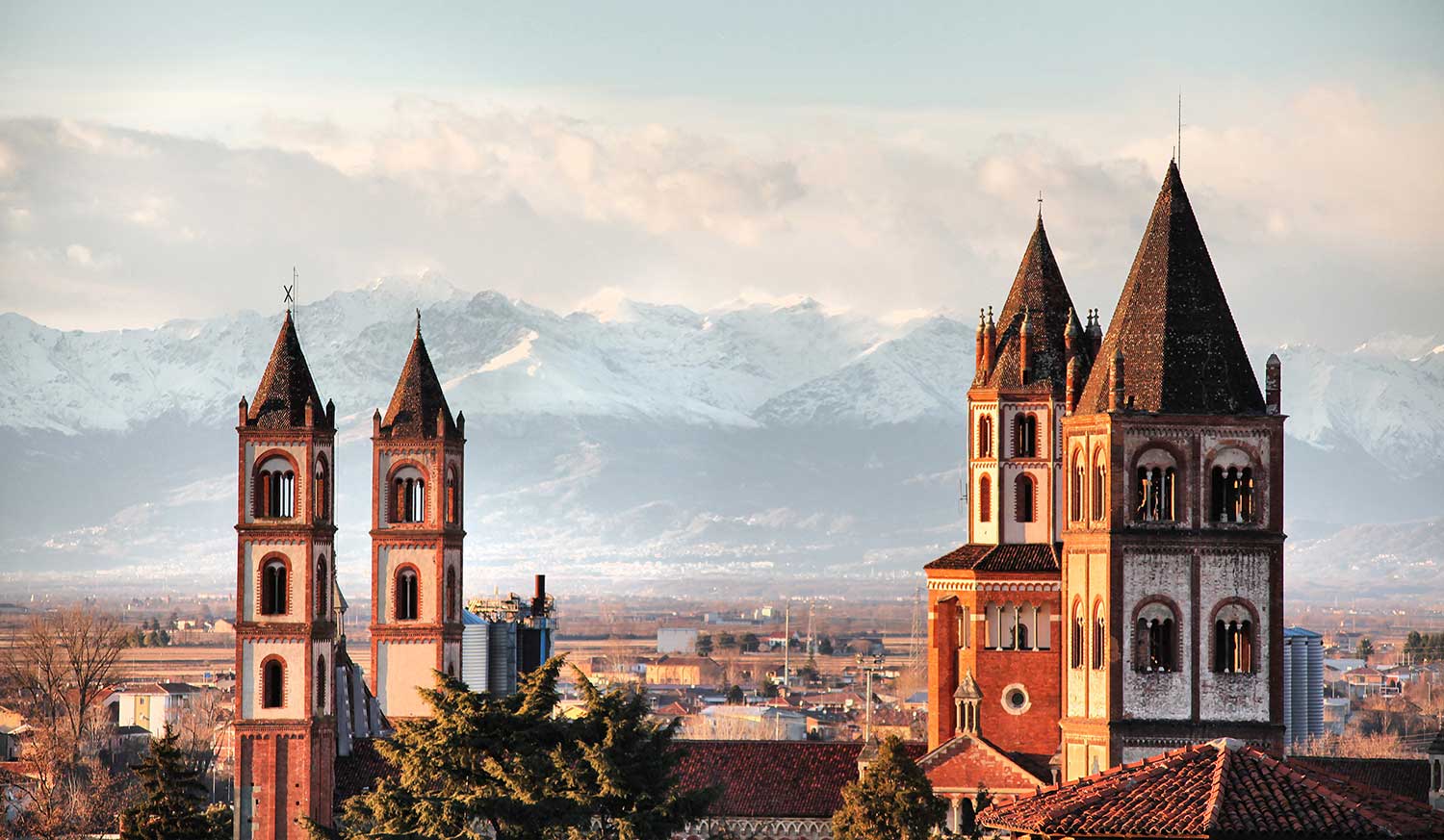
This event originated in 1833, when the processions that were organised by the individual confraternities (which began in the 18th century and were soon regulated by a precise order of appearance) joined that of the Holy Crucifix of Saint Andrew’s Company, which took place in Vercelli on Good Friday.
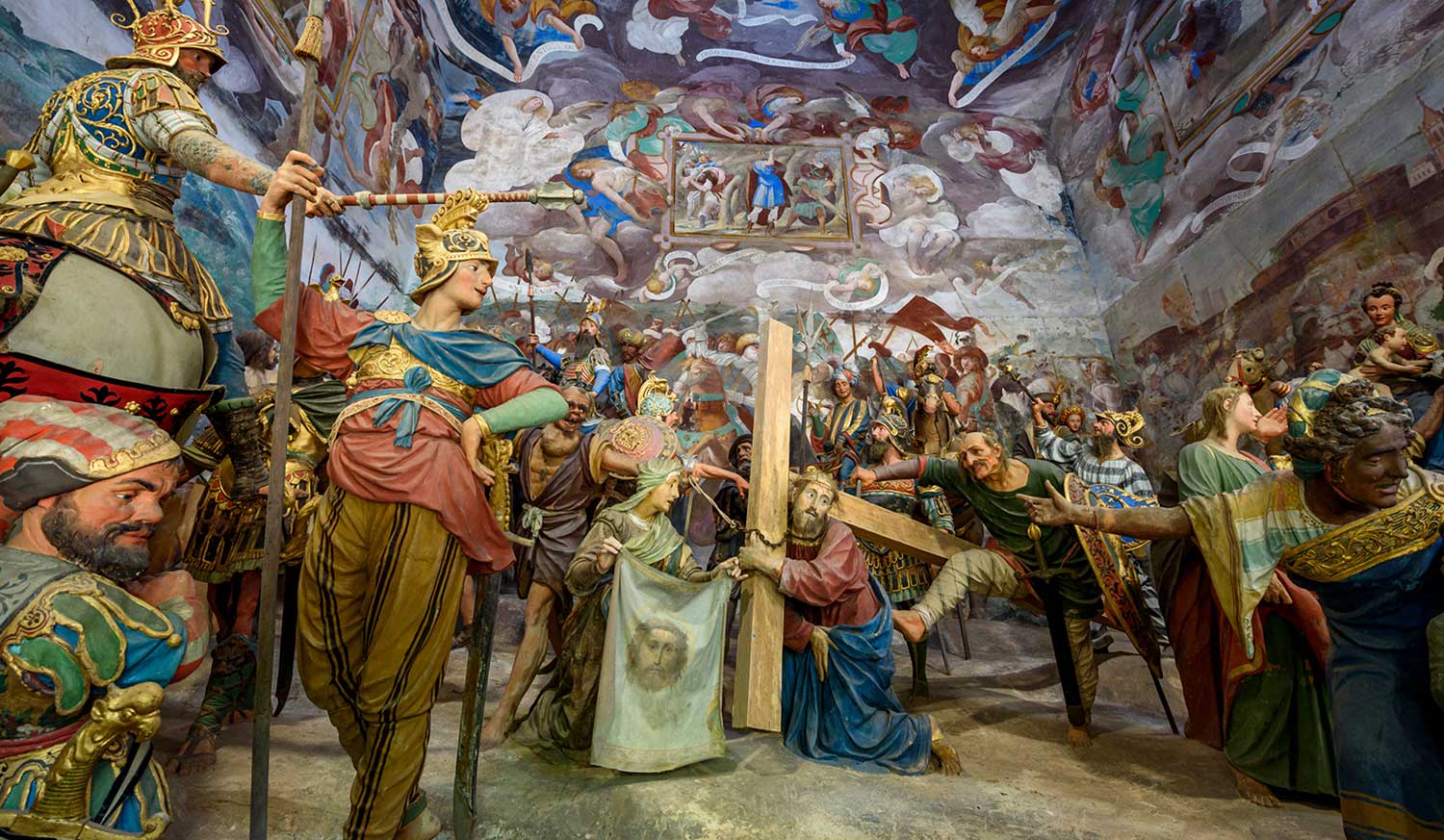
The so-called ‘machines’ are sculptural groups made from coloured wood representing the various episodes of the Passion of Christ, from the Garden of Olives to the Crucifixion. In ancient times, the stretcher used for carrying sick people was called a “machine”. The term later came to mean, in a broader sense, the base on which statues were placed for transport. The “machines” are transferred on Friday to the Basilica of Sant’Andrea, where the procession that brings them all together begins. It then continues by candlelight and torchlight through the streets and piazzas of the town’s centre. A relic of the Holy Cross is also carried in the procession.