Mi prendo e mi porto via – in Valsesia
IN PARTNERSHIP WITH mi prendo e mi porto via
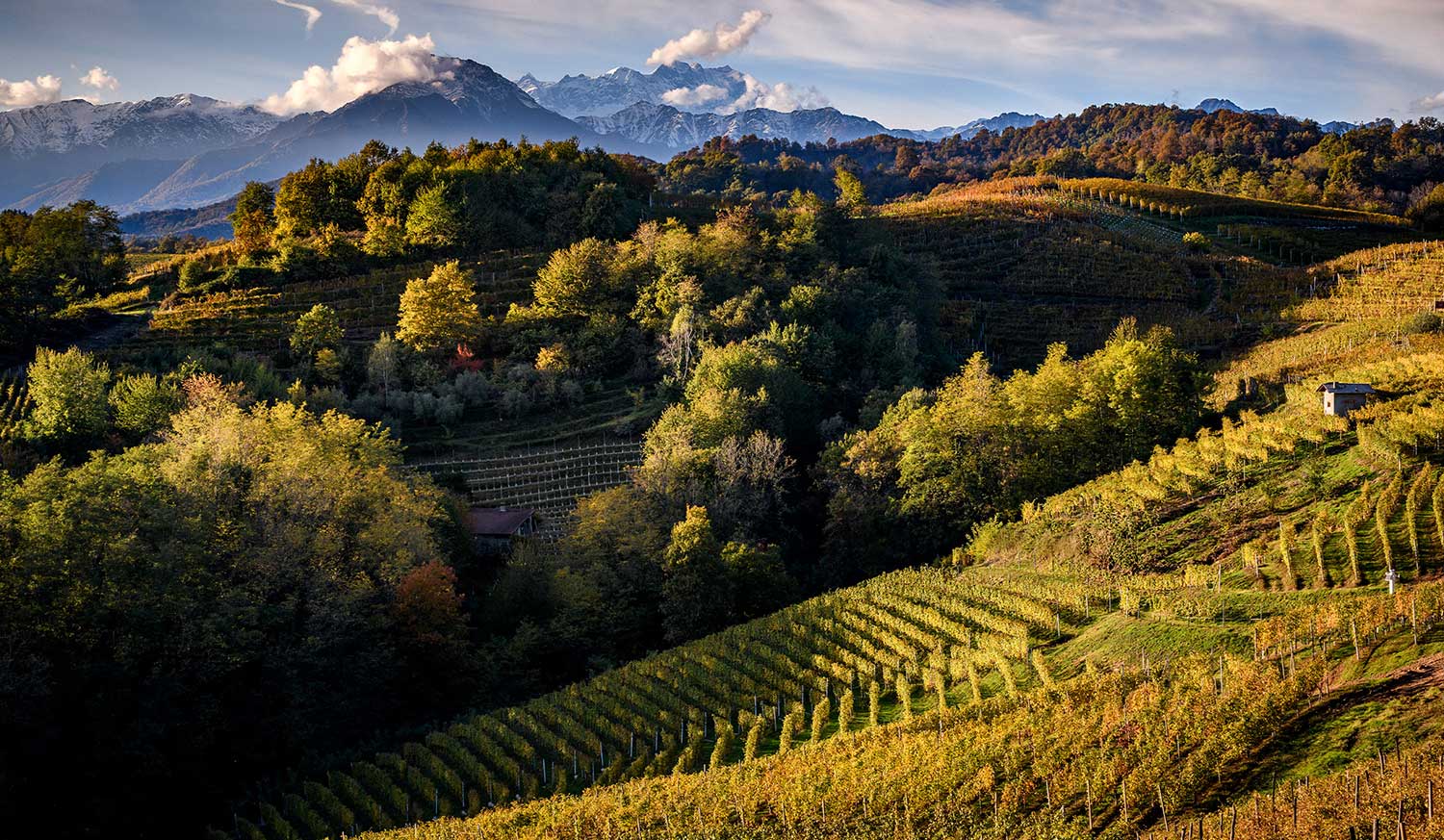
We’ve put together an itinerary that’s all about adventure, tradition, and discovery—an authentic experience for those who love to travel with an open heart and a light suitcase. Together with Elisa and Luca, we’ll take you off the beaten path, through breathtaking scenery and encounters that will leave a lasting impression!

Mi prendo e mi porto via Elisa & Luca
THE PROJECT
The collaboration with Elisa and Luca—known on social media as “Mi prendo e mi porto via”—was launched with the aim of promoting the Valsesia region in order to highlight its cultural heritage and the wide range of activities available there.
The blog’s name, inspired by Ammaniti’s wonderful coming-of-age novel “Ti prendo e ti porto via”, was chosen because at any moment—even when we’re alone—we can pick ourselves up and move away.
THE ITINERARY
A custom-designed itinerary is created, starting in the town of Varallo with a tour of its historic neighborhoods and a visit to the jewel that is the Church of Santa Maria delle Grazie, and concluding with a cable car ride up to Sacro Monte di Varallo. On the second day, they will explore the thrilling bike trail connecting Alagna to Mollia, sample the culinary delight of miacce, and discover the hidden treasures of the village of Mollia. On the third and final day, they will stroll through the upper hamlets of Valvogna before being enchanted by Rassa, the “Most Beautiful Village in Italy.”
Varallo and the
Valsesia
Explore every stop on Elisa and Luca’s trip and create your own itinerary!
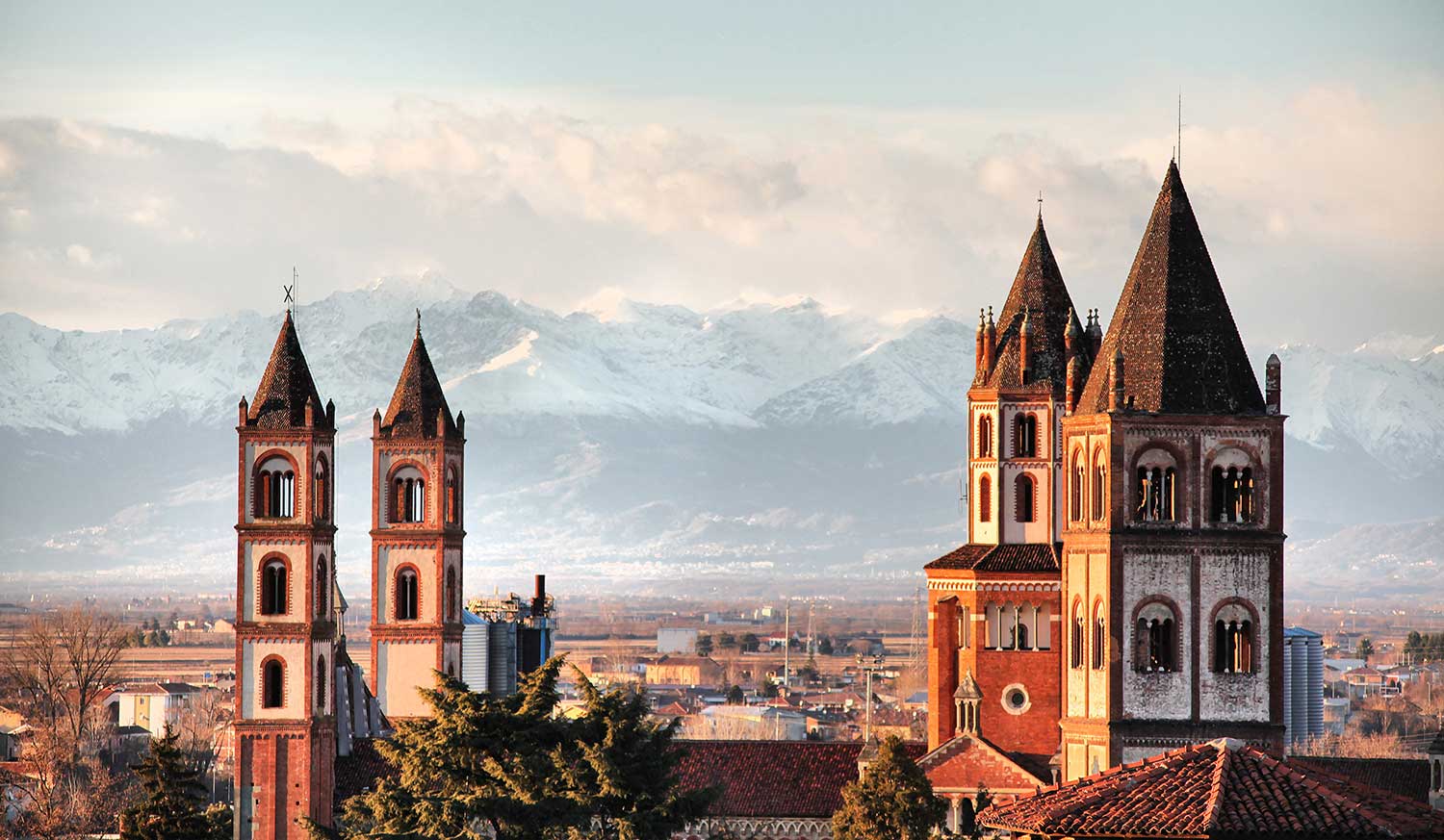
The Collegiate Church of St. Gaudentius
Varallo, the historical and cultural capital of Valsesia
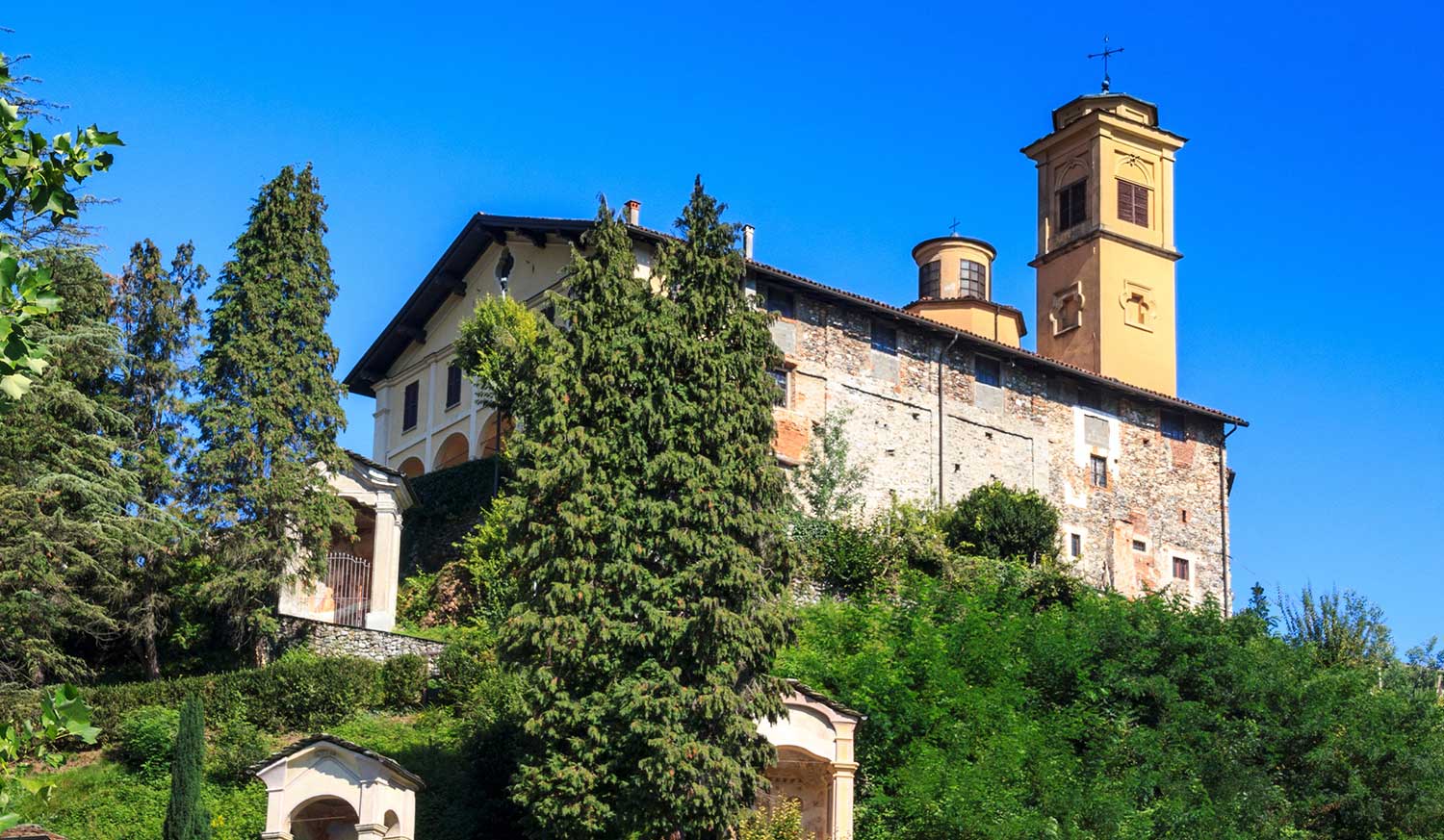
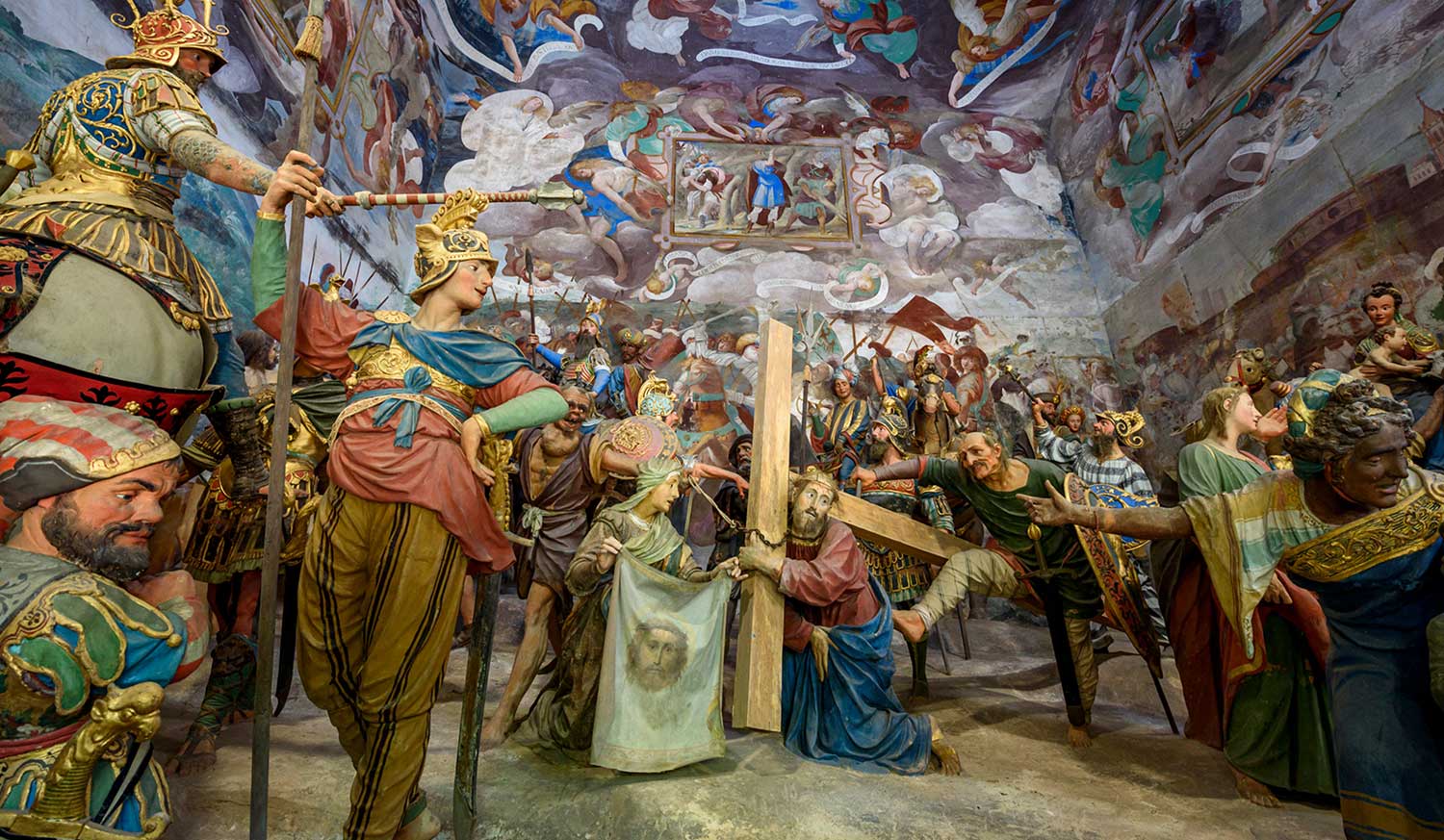
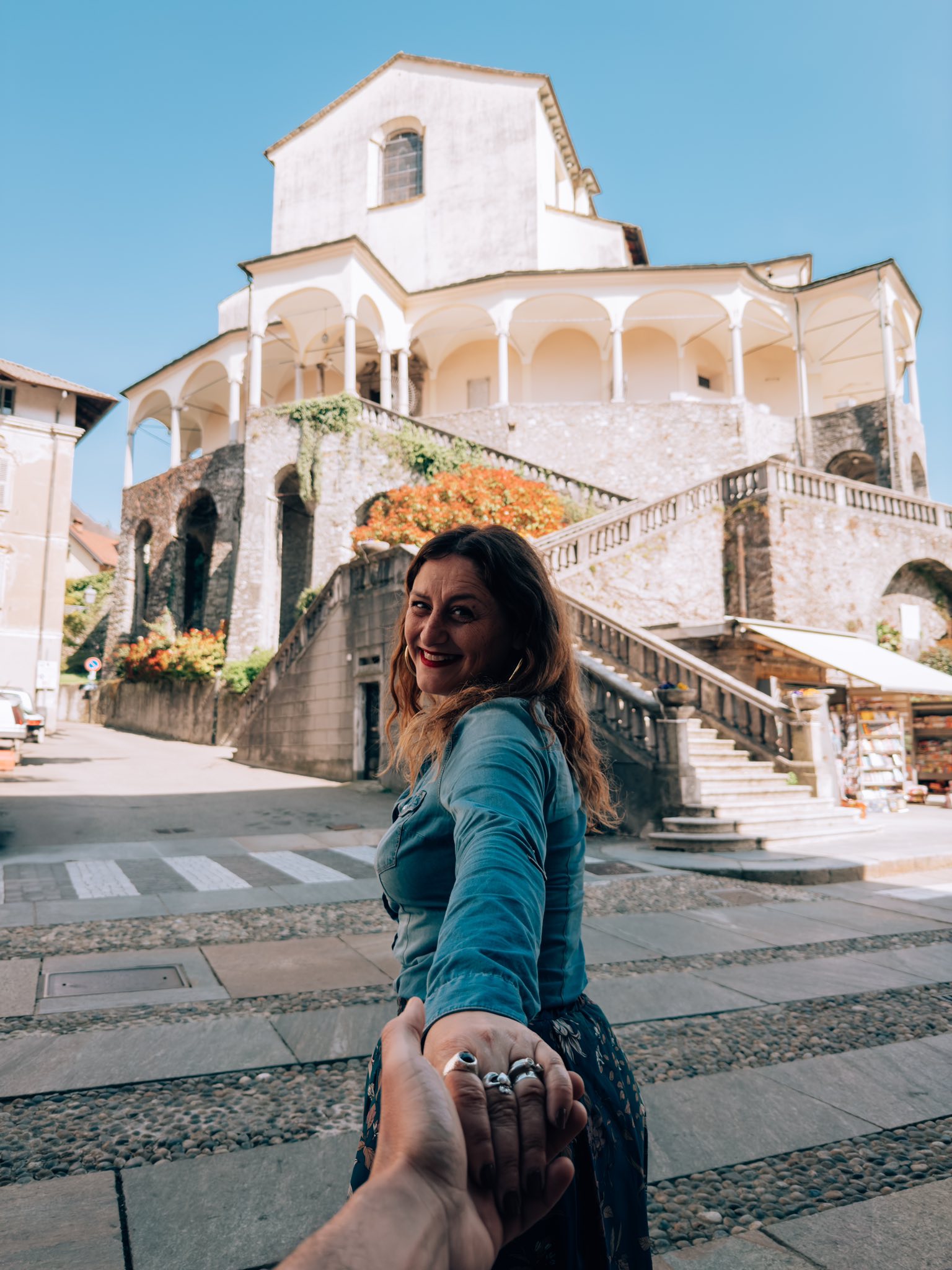
Varallo is home to the oldest Sacred Mount in northern Italy and has been a UNESCO World Heritage Site since 2003. Conceived and commissioned by the Milanese Franciscan Bernardino Caimi as a recreation of the holy sites of Palestine, it consists of 44 frescoed chapels and a basilica, all beautifully set within a natural park.
When admiring Varallo’s artistic masterpieces, one cannot fail to mention Gaudenzio Ferrari. The works of the artist and his students can be found in the city’s churches, including the Church of Santa Maria delle Grazie with its “Gaudenziana Wall,” at Sacro Monte, and in the Varallo Art Gallery. A stroll through the historic districts that make up the old town center is a must; these are characterized by narrow alleys offering glimpses of architectural details such as shops, loggias, courtyards, and historic mansions.
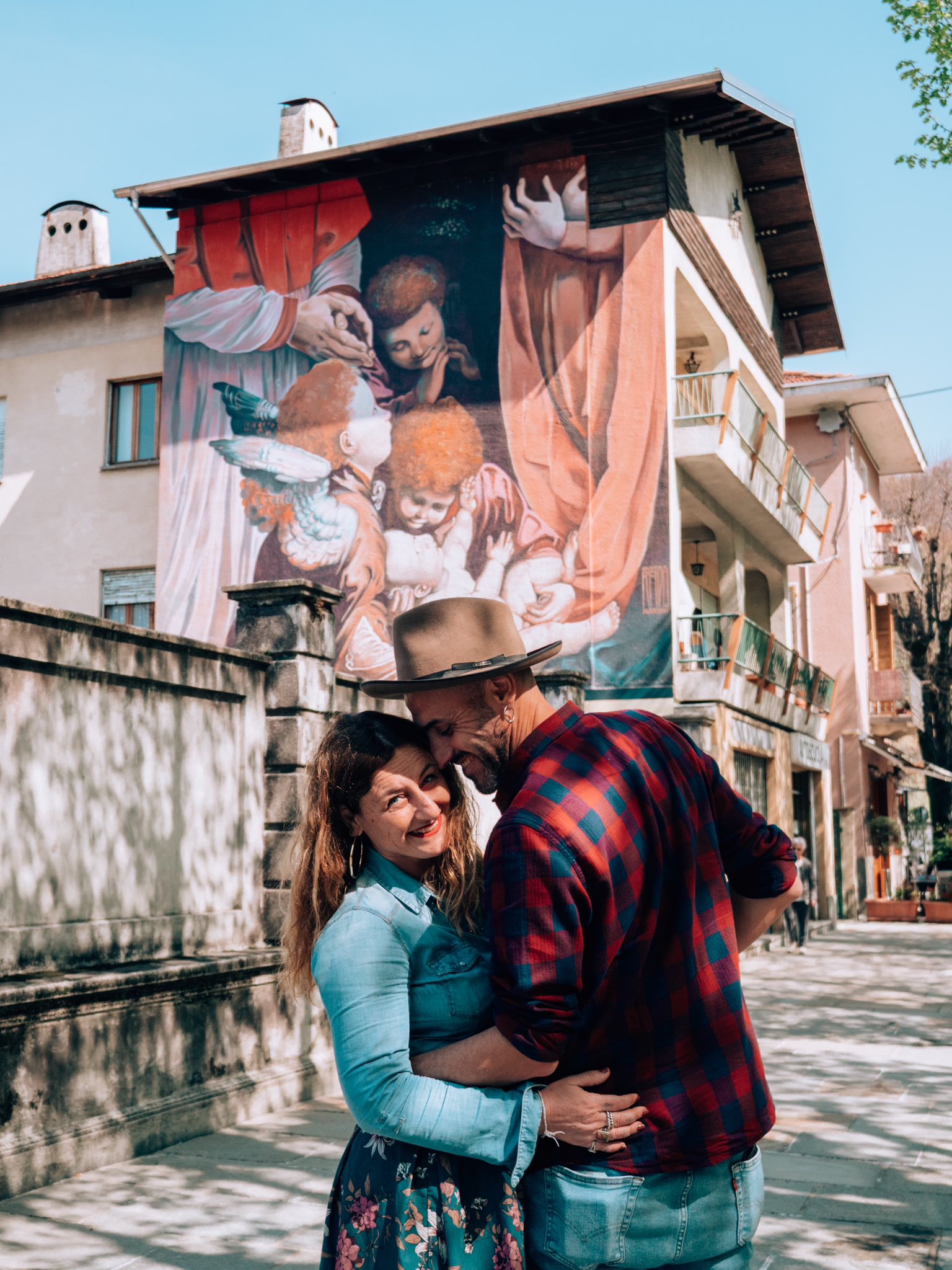
As you walk through the town, it’s impossible not to notice the various murals that brighten the streets and squares. The Waral – Urban Art Project transforms Varallo Sesia into an open-air museum, where street art engages with the town’s historical and cultural heritage. Conceived by Varallo-based photographer Alessandro Dealberto, Waral is a work in progress that invites internationally renowned artists each year to reinterpret local history and traditions through murals and graffiti.
EXPLORING UPPER VALSESIA ON AN E-BIKE, DELICIOUS SNACKS, AND AN AFTERNOON AMONG THE HIGHLAND HAMLETS OF MOLLIA
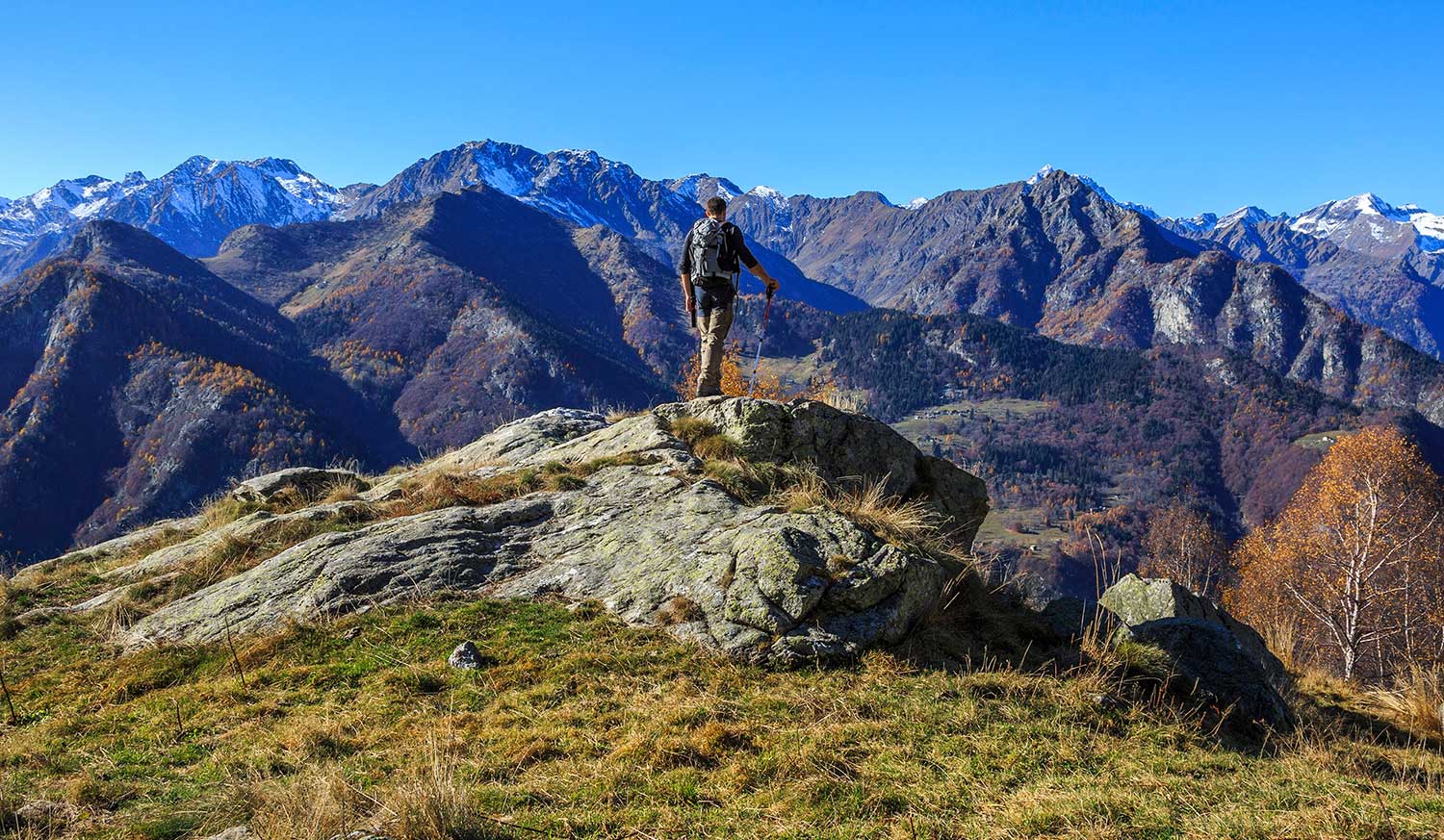
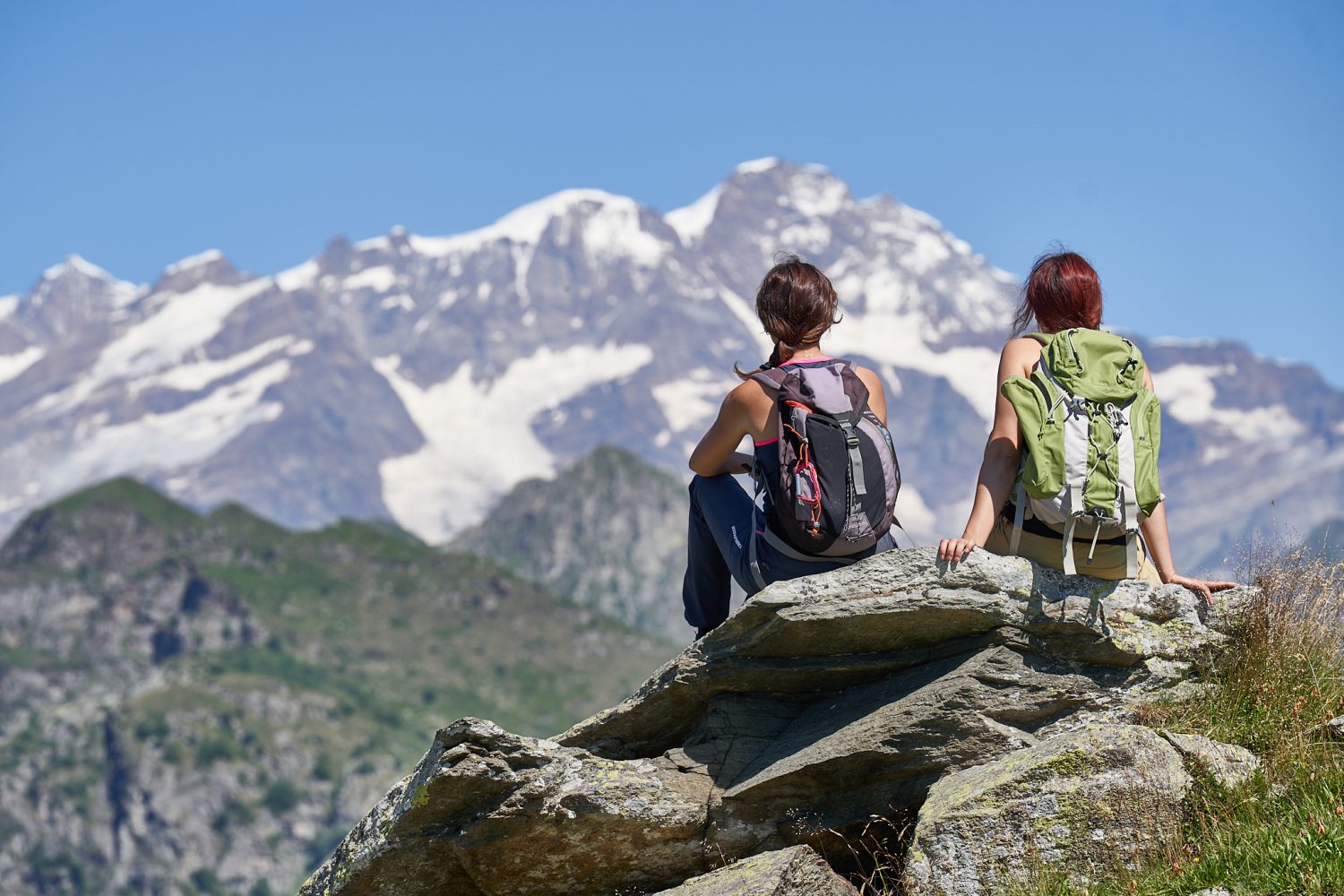
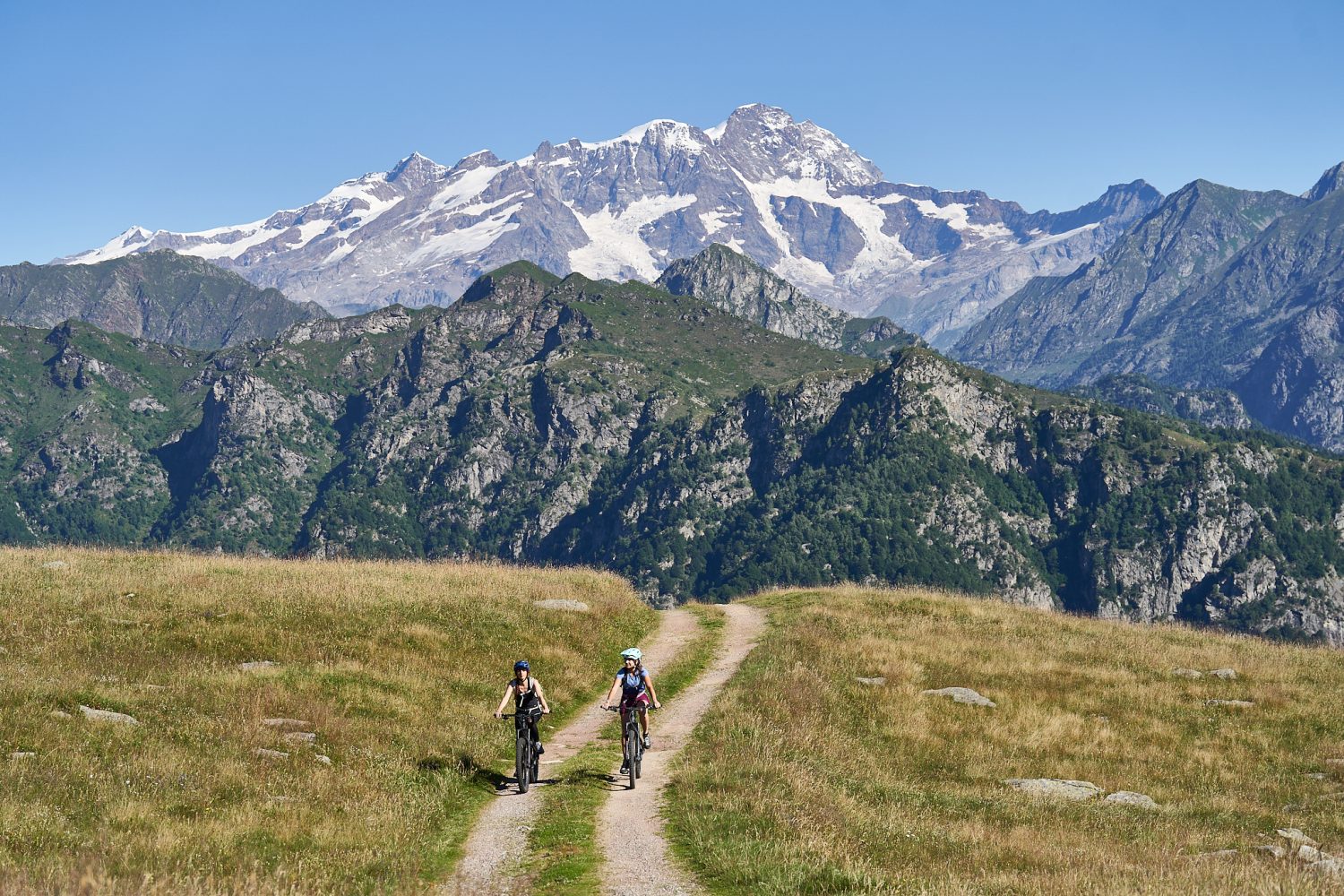
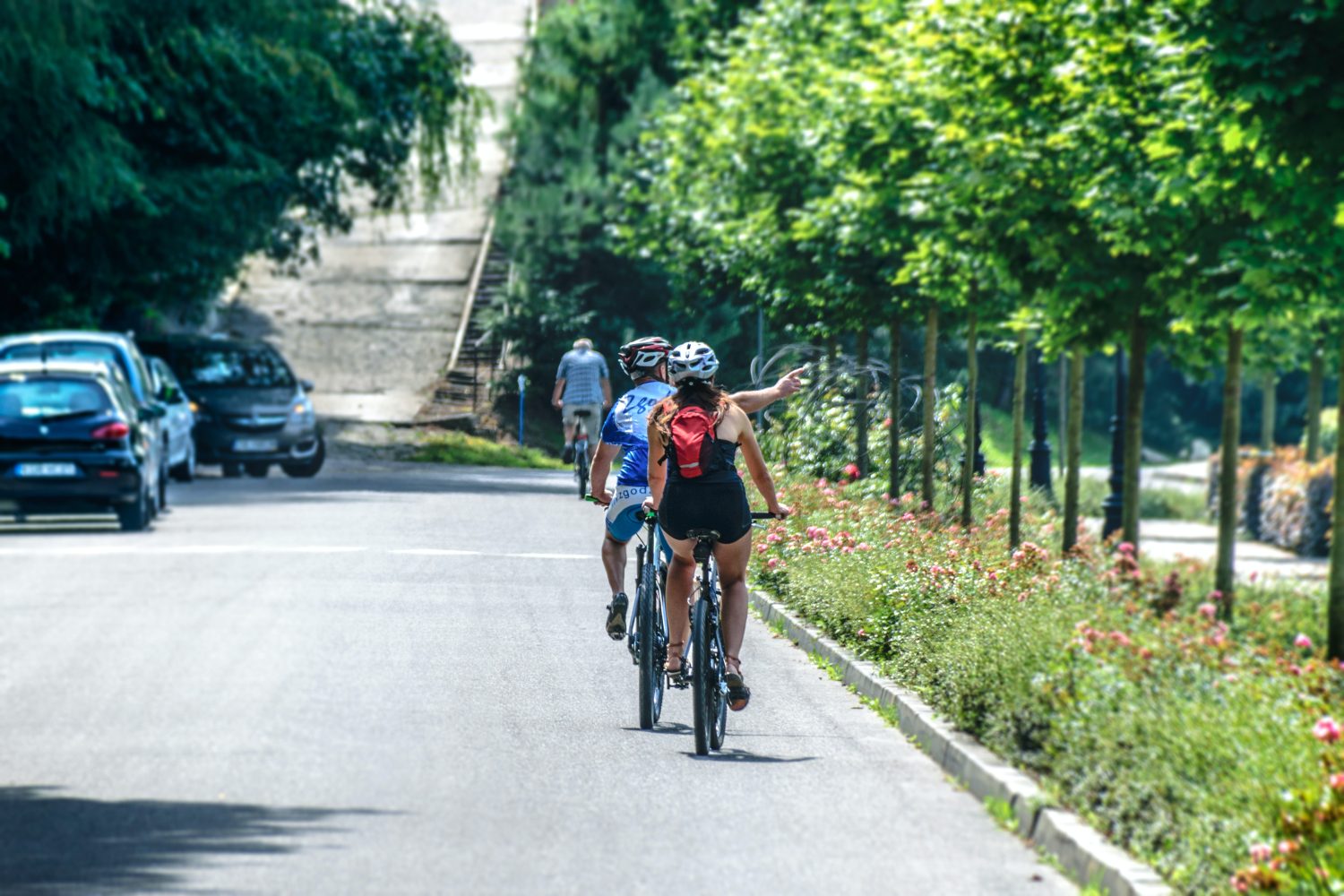
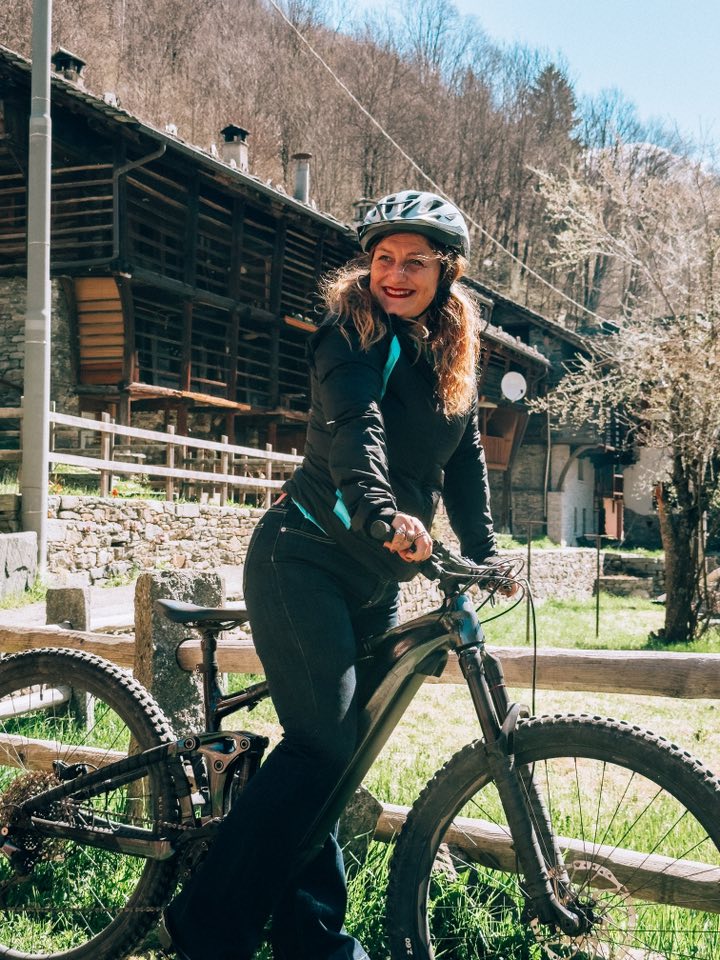
In the morning, we rode along a section of the Alagna-Balmuccia bike path, specifically the stretch connecting the village of Alagna to the village of Mollia. Starting from Alagna, the route winds through the hamlets of Riva Valdobbia, immersing riders in an unspoiled mountain landscape. Along the way, you pass through coniferous forests, green meadows, and small stone villages, offering spectacular views of the Sesia River and the Monte Rosa massif. Yellow signs along the route make it easy to find your way, making the route accessible even to less experienced cyclists.
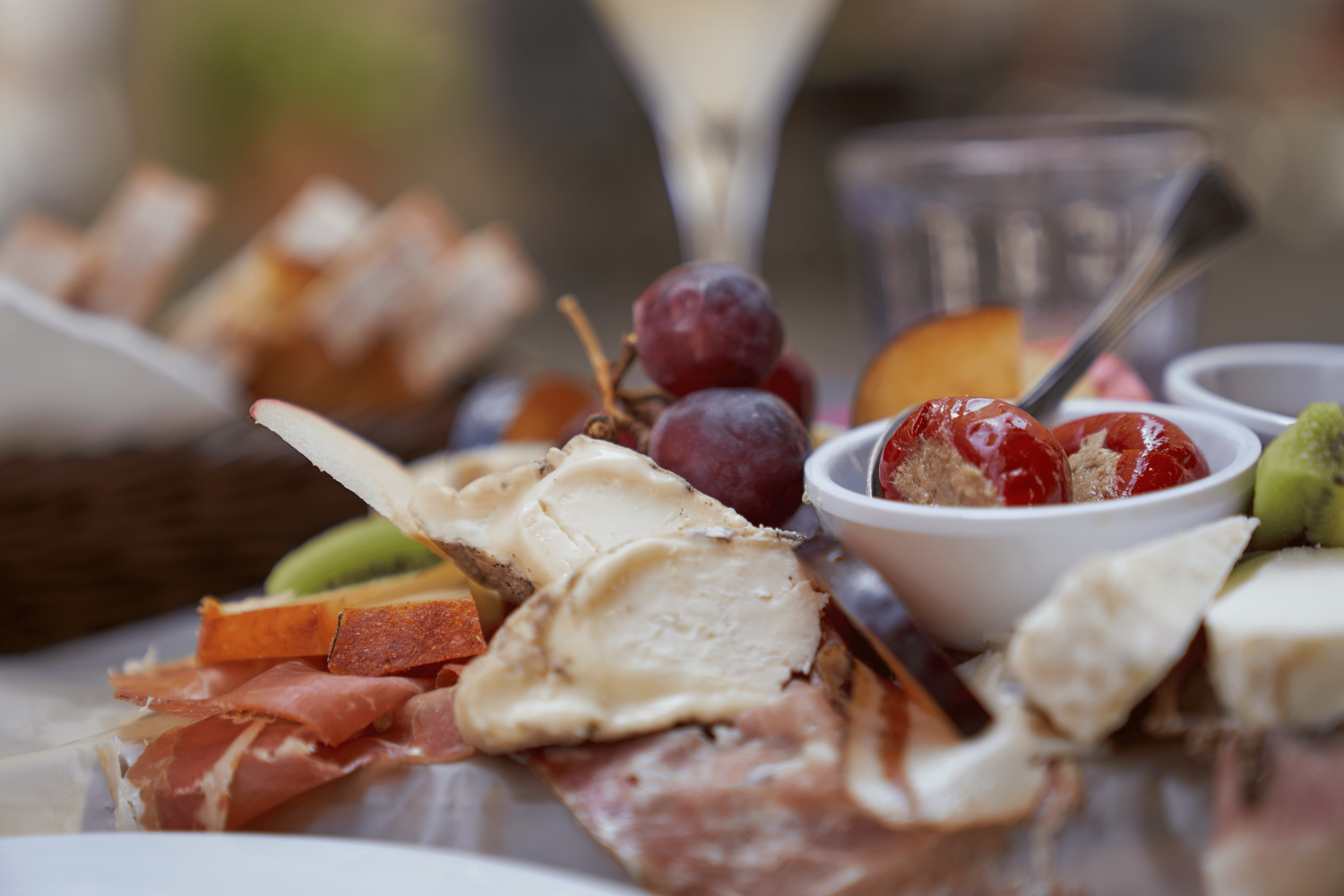
Lunch wouldn’t be complete without a tasting of miacce. Savoring a miaccia is like taking a dip into the history of Valsesia. Paper-thin, crispy, and with an irresistible aroma, this local specialty is made from just a few simple ingredients—water, flour, milk, and a pinch of salt—yet it embodies centuries of Alpine culture. In the afternoon, Elisa and Luca immersed themselves in the centuries-old culture of the village of Mollia with a visit to the Casa Belli site and the Mulino Fucina, dating back to the 17th century; it is one of the few remaining examples of a “17th-century factory.”
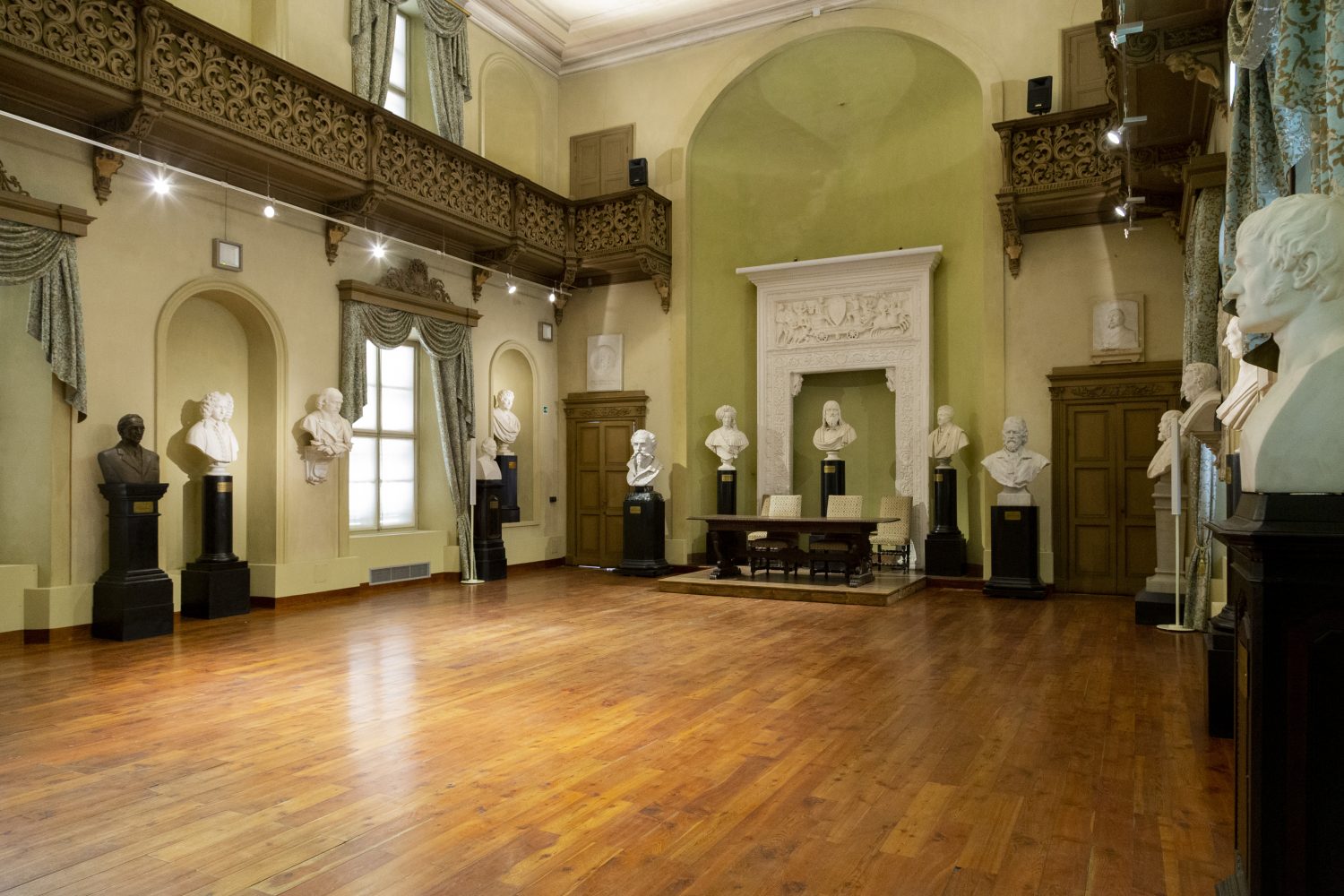
Casa Belli is a perfectly preserved 18th-century residence and a symbol of Mollia’s mountain bourgeoisie. This building offers a glimpse into the daily life of a wealthy family of that era, providing an authentic insight into local traditions. A visit to Casa Belli allows you to immerse yourself in the valley’s history, exploring rooms that have preserved the furnishings and atmosphere of the past intact.
Panoramic view of the Alagna–Balmuccia bike path
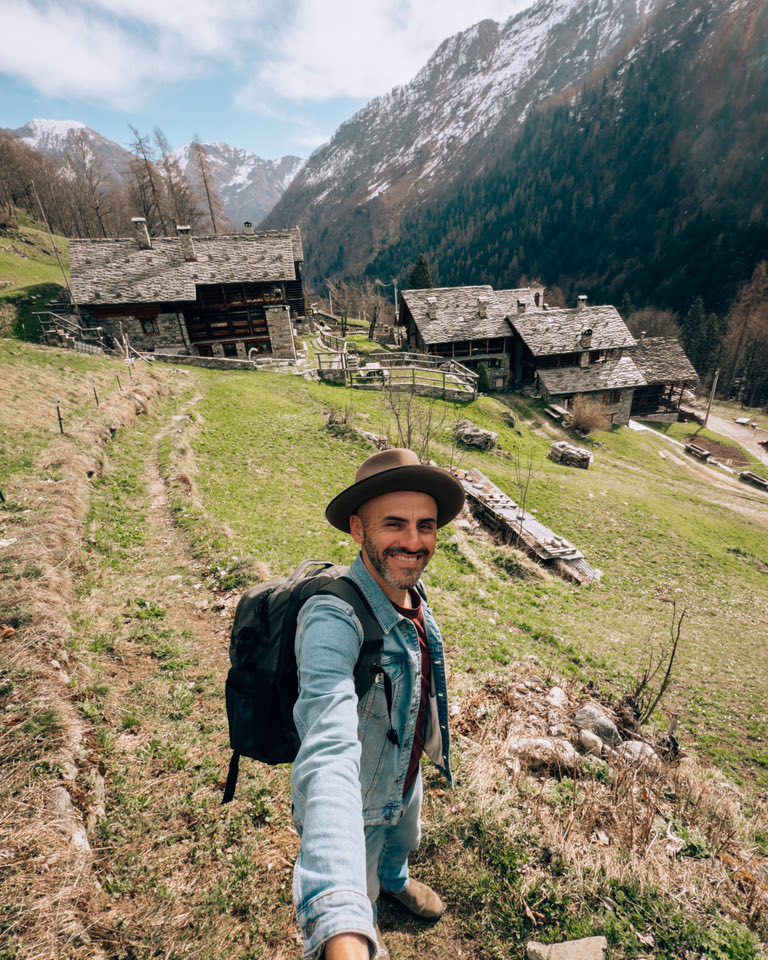
The upper hamlets of Valvogna and a visit to the Rabernardo Ethnographic Museum
The high-altitude villages of the Val Vogna and the Walser Ethnographic Museum in Rabernardo offer an authentic experience for those who wish to immerse themselves in Walser culture and the unspoiled beauty of the Valsesian mountains.
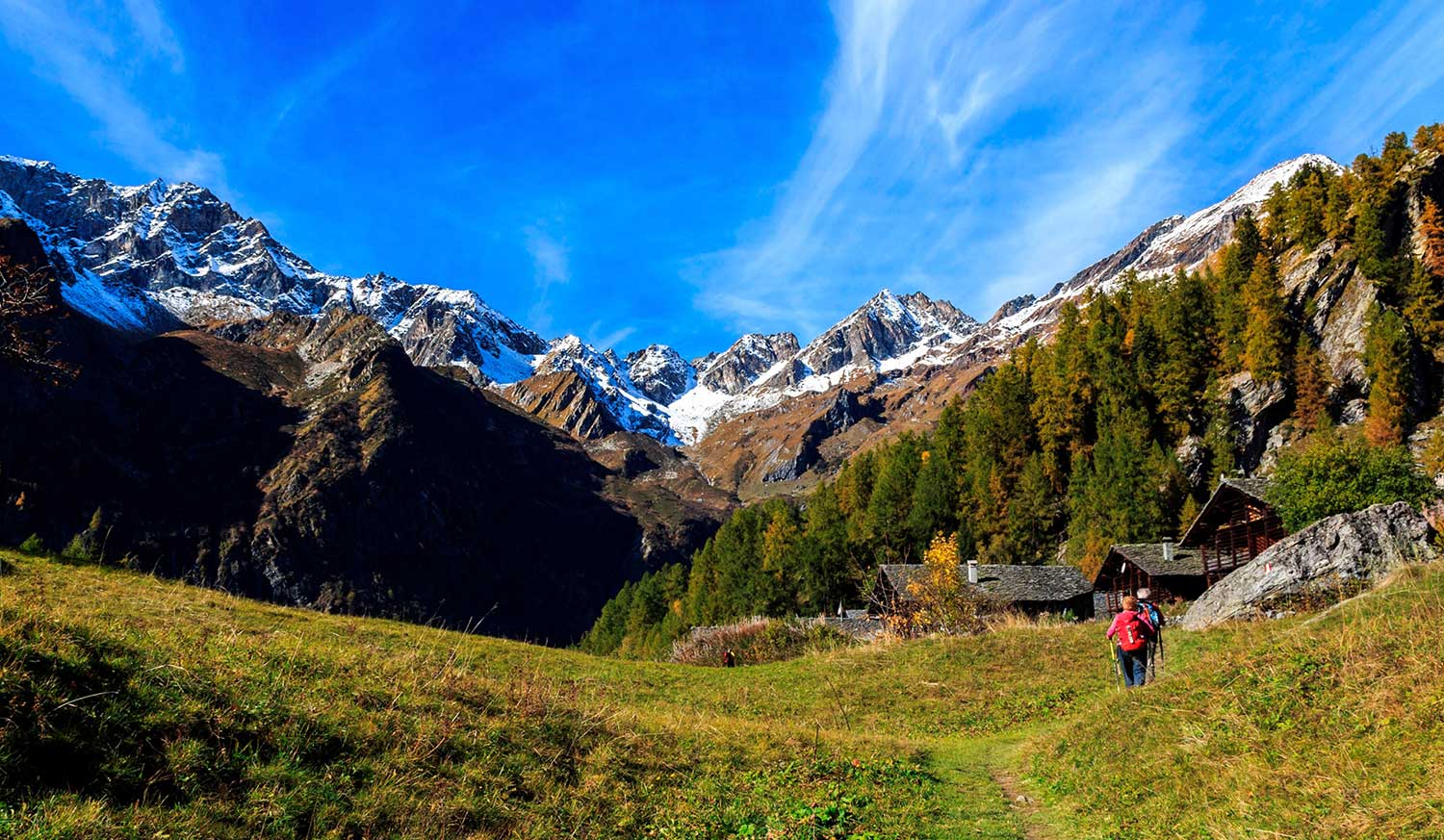
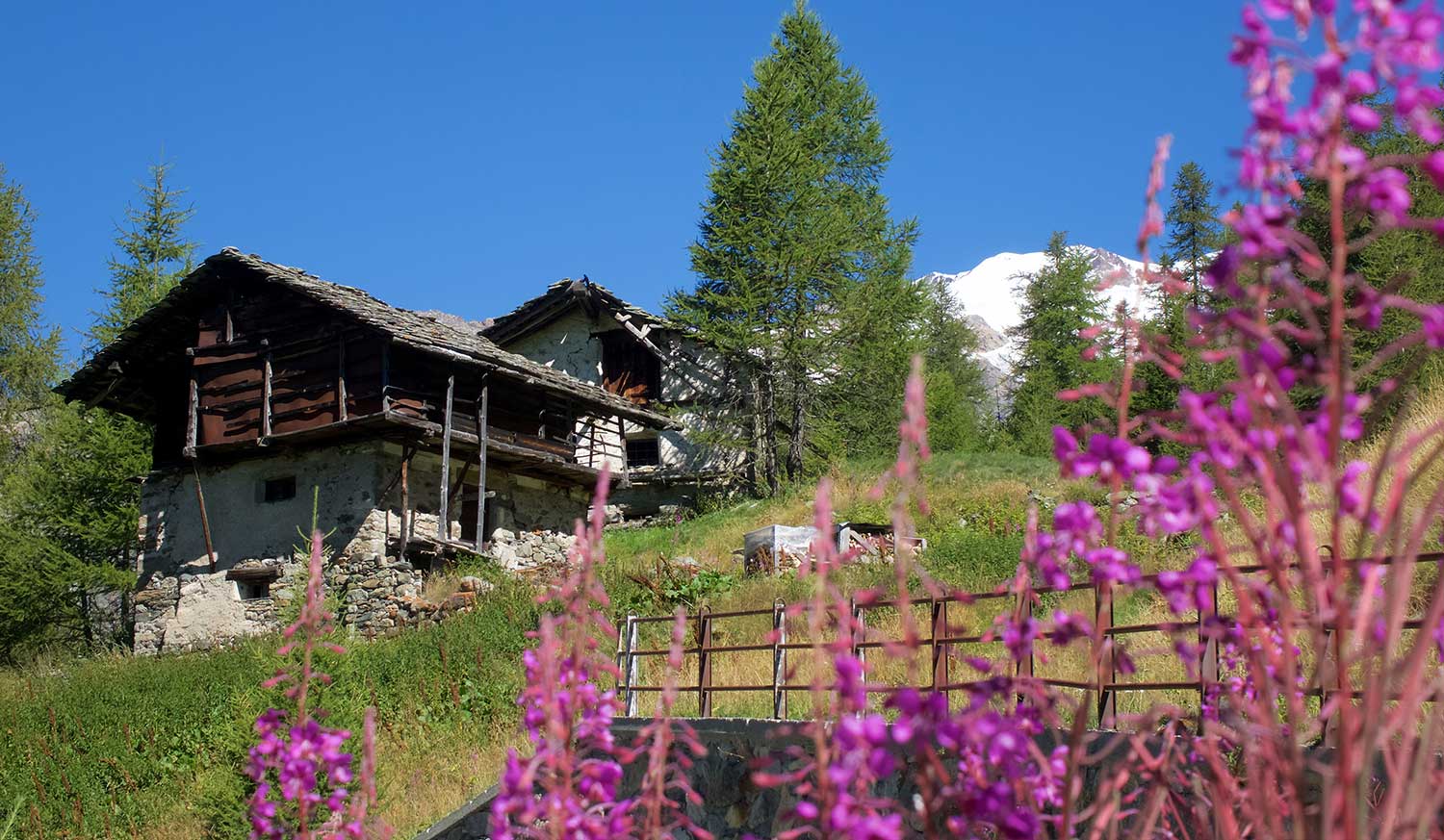
Val Vogna, located in the village of Riva Valdobbia, is a side valley of Valsesia where Walser traditions remain intact. The high-altitude hamlets, such as Rabernardo, Sant’Antonio, and Ca’ Vescovo, can be reached via the Alta Via dei Walser, a scenic trail that winds through forests, mountain pastures, and ancient settlements. These villages, at an altitude of about 1,500 meters, offer a peaceful and picturesque atmosphere, ideal for excursions rich in history and traditional customs.
In Rabernardo, Elisa and Luca visited the Walser Ethnographic Museum, which is housed in a traditional Walser chalet dating back to 1641, carefully restored by the Locca family. The museum spans four floors and faithfully recreates traditional domestic settings.
VISIT TO THE VILLAGE OF RASSA AND THE BRASEI SAWMILL
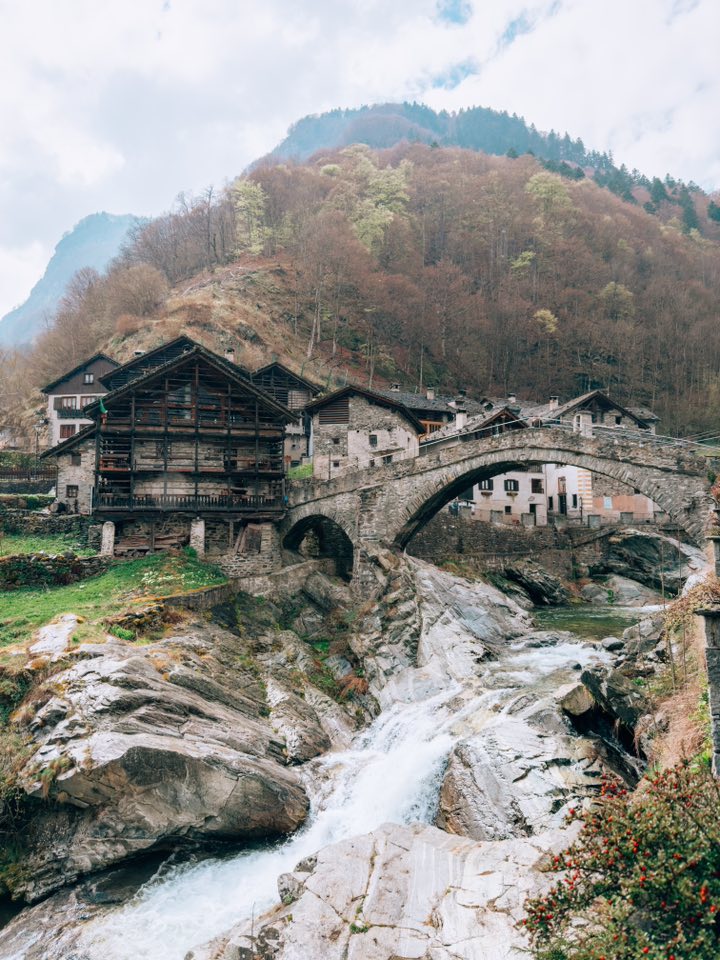
The final stop was the village of Rassa, a picturesque hamlet characterized by stone houses with slate roofs and wooden balconies; the village has preserved the traditional architecture of mountain villages intact. Located at the confluence of the Sorba and Gronda streams, Rassa is surrounded by lush, unspoiled nature, offering numerous hiking trails and panoramic views.
Elisa and Luca were captivated by the Resga di Brasei, a significant example of industrial archaeology. It dates back to the 19th century and harnesses the hydraulic power of the Sorba stream to drive the cutting machines. The structure spans three floors: the lower level houses the waterwheel and gears, the first floor was used for woodworking, while the third floor has been converted into an educational space for tours and workshops. The ecomuseum has recently undergone restoration and offers a unique opportunity to learn about local craft traditions.
mi prendo e mi porto via
Identikit
Name: Mi prendo e mi porto via Elisa & Luca
Origin: Emilia Romagna
Interests: Travel & Culture
Miprendoemiportovia is a travel blog launched in 2011 out of a desire to share their passion for travel. It recounts the trips they’ve experienced firsthand to help and support those who want to plan their own trip or to give the right push to those who haven’t yet found the courage to do so. The goal of their travel blog is to share the places they’ve visited from a perspective that’s as local as possible.